Home >> News >> Industry News >>
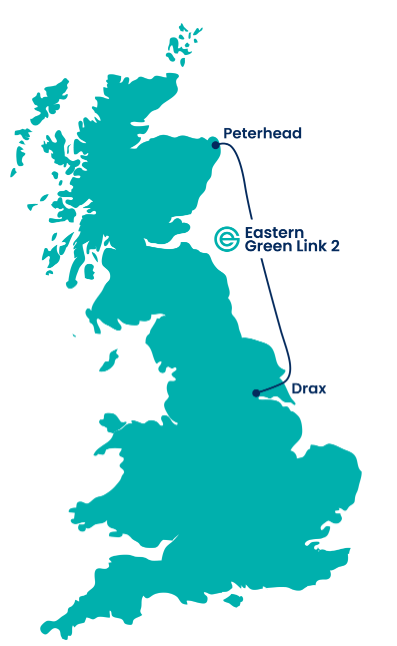
EGL2 is the UK’s largest electricity transmission project currently under construction — a 505km, 2GW subsea power superhighway connecting Peterhead in Scotland to Drax in North Yorkshire, England, capable of powering two million homes. The project is a joint venture between National Grid Electricity Transmission and SSEN Transmission, with a total investment of approximately £4 billion.
Prysmian will use approximately 10,000 tonnes of La Farga‘s Genius 100% recycled copper for the cable conductor. The recycled copper is backed by an Environmental Product Declaration (EPD) provided by La Farga, ensuring full traceability of the recycled material in the EGL2 cables.
The project expects to avoid approximately 56,675 tonnes of CO₂ equivalent emissions compared to the use of conventional primary copper — representing a 13% reduction in Prysmian’s overall carbon footprint within the project scope. The project is supported by the UK energy regulator Ofgem‘s Sustainability Innovation Fund (SIF).
Prysmian is now the single biggest purchaser of copper in the world.
Recycled copper is copper produced from scrap metal — waste cables, discarded electronics, end-of-life vehicle wiring harnesses, and industrial offcuts. In theory, copper can be 100% recycled, and among all metals, copper has the highest recycling rate and best preservation of physical properties.
But here is the catch: recycled copper used to mean “lower quality.”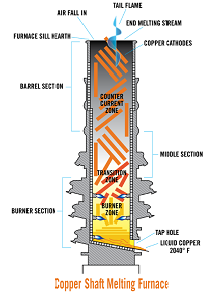
The industry standard for electrical-grade copper is purity of 99.95% or higher. Traditional recycled copper processes could only achieve 97–98% purity. Impurities — lead, iron, tin, zinc — interfere with electron flow, increasing electrical resistance and reducing conductivity. For decades, recycled copper conductors were the leading cause of failed cable quality inspections.
This is why recycled copper was long dismissed as a “cheap substitute” — unsuitable for power cables, let alone 500km subsea HVDC cables that carry 2GW of electricity.
That era is over.
Virgin Copper | Recycled Copper (Traditional) | Recycled Copper (EPD-Grade) | |
Purity | ≥99.99% | 97–98% | ≥99.95% |
Conductivity | Benchmark | Reduced by impurities | Equivalent to virgin |
Carbon footprint | High (mining + smelting) | Lower | |
Traceability | N/A | None (mass balance) | |
Cost | High | 30–50% lower | Competitive |
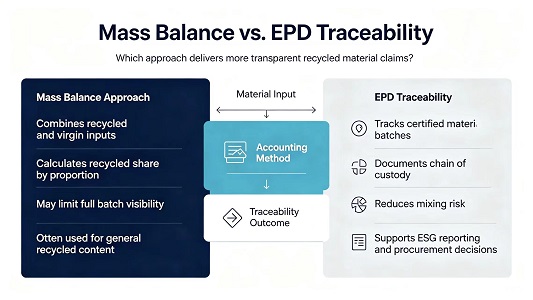
The breakthrough is not just about purity — it is about traceability. La Farga‘s EPD guarantees that the 10,000 tonnes of recycled copper are physically contained in the rods supplied to Prysmian — not blended through a mass balance approach where recycled content cannot be certified. This is the difference between a marketing claim and an auditable fact.
1. Purity could not be stabilized.
Electrical cables require purity of 99.95% or higher. Traditional recycled copper processes could not consistently achieve this. Impurities — lead, iron, tin — remained in the final product, increasing resistance and reducing conductivity. As a result, recycled copper conductors became a leading cause of failed cable quality inspections.
2. Copper prices were too low to justify recycling.
Recycling and refining scrap copper costs money. When copper prices are low, recycled copper is not profitable. The economics only work when copper prices stay high — which is exactly what has happened in 2025 and 2026.
3. No traceability system existed.
Even when recycled copper achieved adequate purity, buyers could not prove that a specific cable shipment contained recycled content. The industry relied on mass balance — mixing recycled and virgin copper and calculating averages. This approach is not auditable, making it useless for ESG disclosures.
1. Copper prices are at historic highs.
LME copper traded at $13,600+/ton in July 2026. The recycled copper market is projected to grow from 9.04 million tons in 2025 to 15.17 million tons by 2031, at a CAGR of 9.04%. High copper prices make recycling economically viable — and the supply gap is only widening: 5, 35, and 43万吨 deficits are projected for 2026, 2027, and 2028 respectively.
2. Carbon reduction is moving from “nice-to-have” to “must-have.”
Metal conductors account for 70–90% of a cable‘s lifecycle carbon footprint. Replacing virgin copper with recycled copper is the single most effective lever for reducing that footprint. In 2026, Nexans achieved an average of 19% recycled copper content, moving toward its 2028 target of 25%. LS Cable has begun mass production of recycled copper, targeting an 80% reduction in carbon emissions.
3. EPD certification made traceability possible.
La Farga became the first company in the copper sector to obtain EPD certification for its wire rod. The EPD verifies that recycled content is physically contained in the product — not blended through a mass balance approach. For buyers, this means a cable shipment can now be audited and verified. EPD complies with ISO 14025 and EN 15804 international standards.
4. AI is transforming scrap sorting.
New AI-powered sorting technologies can separate high-purity copper from mixed scrap with unprecedented accuracy, producing engineering-grade material without traditional smelting — further closing the quality gap.
This is not a one-off PR event. It is an industry inflection point.
Dimension 1: Carbon is becoming a procurement gatekeeper.
When your competitor bids with EPD-certified recycled copper and you bid with virgin copper, your price may be competitive — but your ESG score will not be. European infrastructure projects are systematically writing carbon footprint requirements into tender documents. ESG scores are increasingly becoming pass/fail criteria, not bonus points.
Dimension 2: Traceability is the new baseline.
Mass balance blending is being phased out. Buyers who cannot provide EPD-certified traceability for their copper will find themselves locked out of major European tenders. This is not a materials issue — it is a compliance capability issue.
Dimension 3: The world‘s largest copper buyer just moved.
Prysmian is the single biggest purchaser of copper in the world. When the largest buyer makes a 10,000-tonne commitment to recycled copper on a nationally critical infrastructure project, the supply chain follows. Other manufacturers will be forced to follow — not because they want to, but because their customers will demand it.
Dimension 4: The industry is moving in unison.
Nexans: 25% recycled copper target by 2028.
LS Cable: Recycled copper mass production, 80% carbon reduction.
igus: 591,000 tonnes of copper removed from the global supply chain through recycling.
Prysmian: EGL2 sets the first industry benchmark
Recycled copper and EPD traceability are reshaping procurement standards. Whether you need EPD-certified copper cables or want to discuss your project‘s compliance requirements, we’re here to help.
Tel: +86-371-6054 7601
WhatsApp / WeChat: 0086 135 9887 3045
Email: Admin@cncablegroup.com
inquiry