
Home >> News >> Industry News >>
A $2 million BESS container just burned to the ground. The UL 9540A system certificate didn't stop it. The culprit wasn't the battery cells or the BMS—it was the DC cable connecting the racks.
How? Because the cable was qualified for a 2,000-hour life at 90°C, but it was installed inside a sealed steel box operating at 125°C.
Short answer: You cannot use standard PV cable (EN 50618) to cut costs on BESS DC links. UL 9540A tests if a fire escapes the enclosure; it does not test if the insulation inside survives the heat. To meet NFPA 855 and insurer scrutiny, you must specify BESS-specific cables (TÜV 2PfG 2693). The difference between a 2,000h and a 3,000h thermal ageing test isn't a slight upgrade—it's the difference between a safe system and a delayed short circuit.
NFPA 855-2026 has tightened spacing and fire suppression rules, but it often defers wiring to NEC Article 706. So the industry relies on UL 9540A. But here is the brutal truth from the Washington State Department of Ecology: UL 9540A evaluates thermal runaway at the system level. Its scope explicitly “does not address larger-scale failures that could occur, for example, with a loss of insulation and subsequent arcing.”
In plain English: A system certificate proves fire doesn’t escape the box. It proves absolutely nothing about whether the cable inside the box will degrade, crack, and arc under continuous 125°C heat. Passing UL 9540A with unrated cables is building a house with a certified roof and termite-ridden wooden beams.
The substitution is rampant because it’s easy. A standard PV cable (H1Z2Z2-K) is rated 1500V DC, is double-insulated, and is sitting on the warehouse shelf. A true BESS cable (TÜV 2PfG 2693) usually takes 6–8 weeks to manufacture.
So procurement teams use the PV cable. But look at the test data:
Test parameter | PV Cable (EN 50618) | BESS Cable (TÜV 2PfG 2693) |
Continuous Conductor Temp | 90°C | 125°C |
Thermal Ageing Test | 2,000h @ 90°C | 3,000h @ 125°C |
Electrolyte Resistance | Not tested | Required (72h immersion) |
The math is lethal. Inside a battery enclosure packed with high C-rate cells, ambient temperatures easily push conductor temps past 100°C. A PV cable aged for 2,000 hours at 90°C will lose its dielectric strength years before its expected lifespan. When a cell vents electrolyte, the PV cable has no chemical resistance. It swells, cracks, and the insulation fails.
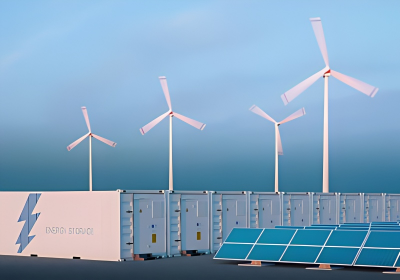
When an underspecified cable fails in a 1500V DC system, it doesn't just trip a breaker.
AC arcs self-extinguish at the zero-crossing. DC arcs do not. When the degraded insulation breaks down, the DC fault current sustains a continuous plasma arc—a localized blowtorch reaching thousands of degrees. This arc easily pierces the cable jacket, ignites the vented hydrogen gas from the batteries, and turns a manageable cell failure into a catastrophic enclosure fire.
A 2026 failure analysis of a 50MW/100MWh BESS fire revealed exactly this: the DC cables were sized for standard ampacity without derating for the sealed, high-heat environment. The insulation aged faster than the design basis, leading to a sustained DC arc that didn't clear until the fire suppression system activated.
You cannot see micro-cracks or thermal degradation during goods-in inspection. But you can force compliance at the quotation stage.
1. Reject "PV Cable" for DC Links: Mandate TÜV 2PfG 2693 (or equivalent BESS standards). If the supplier offers EN 50618 or IEC 62930, reject it. It is a 90°C product.
2. Demand the Ageing Matrix: Do not accept "Passed Thermal Ageing" on a datasheet. Demand the exact hours and temperature (e.g., 3,000h @ 125°C).
3. Ask for Electrolyte Immersion Data: If the cables route near battery racks, demand the 72-hour immersion test report. If they can't provide it, they didn't test for the most common chemical failure point in a BESS.
4. Document Derating: If you are forced to use PV cable in a ventilated, lower-temp zone, write it into the contract as a calculated specification deviation, not as an "equivalent alternative."
Q1: Our system integrator provided a UL 9540A certificate. Doesn't that cover the whole BESS?
No. UL 9540A is a system-level fire propagation test. The Washington State Department of Ecology explicitly notes it does not cover "loss of insulation and subsequent arcing." A UL 9540A certificate proves the container won't spread fire to the next container; it does not prove the internal DC cables will survive 125°C for a decade.
Q2: We've been specifying standard 1500V PV cable for our battery racks. Why is that a problem?
Because voltage rating is not temperature rating. PV cables are aged at 2,000 hours at 90°C. BESS cables (per 2PfG 2693) are aged at 3,000 hours at 125°C. Inside a sealed battery enclosure, temperatures regularly exceed 90°C. You are operating the PV cable outside its qualified thermal envelope, accelerating insulation failure and risking a DC arc.
Q3: What is DC arcing and why does it burn down containers?
Unlike AC, DC current has no zero-crossing point. If a cable's insulation cracks due to heat, a DC arc will sustain itself and burn like a blowtorch. It can easily melt through the cable, ignite vented battery gases, and cause a secondary fire that overwhelms the suppression system.
Q4: If 2PfG 2693 cables have an 8-week lead time, can I just use PV cable and upsize the cross-section?
No. Upsizing the copper does not fix the insulation's thermal limit. A thicker PV cable still uses 90°C-rated XLPE. It will melt and crack at the same temperature. You must change the cable standard, not just the wire gauge.
Don't let a $5/meter PV cable take down a $2 million BESS container. Send us your DC link routing temperature profile, cable standard, and required derating factor. We will review your RFQ against TÜV 2PfG 2693 requirements and tell you exactly where the thermal and chemical gaps are.
Tel: +86-371-6054 7601
WhatsApp / WeChat: 0086 135 9887 3045
Email: Admin@cncablegroup.com
Previous : BS 7671 A4 Implemented: Fire-Rated Cables Must Use Fire-Rated Fixings
NEXT : none
inquiry

