
Home >> News >> Company News >>
YY, CY, and SY are three of the most common PVC control cable types under the CENELEC naming system.They may look similar, share the same voltage rating, and even have the same conductor structure — but their internal shielding is completely different. YY has no shield. CY uses a copper braid. SY uses a galvanized steel braid. The shielding type determines the cable‘s EMI immunity, mechanical protection level, and application suitability.
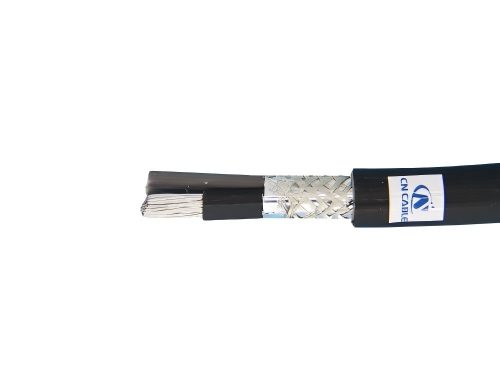
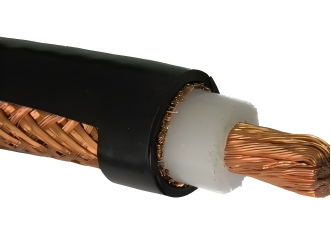
Part I: Naming Rules and Construction
The CENELEC naming system uses letters to indicate construction:
l First letter: Insulation material. Y = PVC.
l Second letter (YY only): Sheath material. Y = PVC.
l C or S (CY/SY only): Shield type. C = copper braid; S = galvanized steel braid.
l Final Y: Sheath material. Y = PVC.
Type | Construction | Shield | Sheath |
YY | PVC insulation + PVC sheath | None | PVC |
CY | PVC insulation + tinned copper braid + PVC sheath | Tinned copper braid | PVC |
SY | PVC insulation + galvanized steel braid + transparent PVC sheath | Galvanized steel braid | Transparent PVC |
All three types use IEC 60228 Class 5 fine-stranded copper conductors for flexibility.
Electromagnetic shielding cannot be judged by “has shield“ or “no shield.“ It must be measured against specific parameters.
Key metrics: Transfer impedance (lower is better, measured in mΩ/m) and screening attenuation (higher is better, measured in dB). These directly determine signal integrity in EMI-heavy environments.
Quantified comparison:
l CY: Copper braid coverage is typically ≥85%. Copper‘s high conductivity makes it effective against low to medium frequency (1 kHz – 15 MHz) EMI.
l SY: Steel braid provides some EMC protection, but steel‘s conductivity is far lower than copper, so EMI shielding is inferior to CY. SY‘s core value is resistance to mechanical impact and crushing, not EMC.
Application case: A CNC machine tool experienced 0.1 mm positioning errors because its CY cable had a copper braid coverage of less than 65%, allowing servo interference. This led to scrapped precision parts. It demonstrates that quantified shielding coverage directly affects final application performance.
Shield type directly determines mechanical strength and installation flexibility.
Bending radius: Due to its steel braid hardness, SY has a minimum bending radius of 20× outer diameter for mobile installation — significantly larger than YY and CY. In confined spaces or frequent-bending applications, SY is much harder to install.
Tensile strength: Typical values show YY at approximately 50 N, CY at 80 N, and SY at 300 N, reflecting SY‘s “light armour“ mechanical protection capability.
Temperature range: Standard PVC cables typically have a flexible operating range of -5°C to +70°C.
Three-step selection:
l Is there electromagnetic interference? (Yes → CY)
l Is the cable exposed to mechanical stress? (Yes → SY)
l Is installation space limited or frequent bending required? (Confined/frequent → reconsider SY)
Product reference: CN Cable Group offers the YY PVC Control Cable for basic control wiring in low-interference environments, and the CY PVC (YSLCY) Control Cable for EMC protection. The CY product uses a tinned copper braid shield with coverage ≥85%, compliant with IEC 60227, suitable for industrial automation, VFD environments, and signal-sensitive circuits. An SY Control Flexible Cable is also available for applications requiring both mechanical protection and EMI shielding.
For project-specific control cable selection support, contact us.
Tel: +86-371-6054 7601
WhatsApp / WeChat: 0086 135 9887 3045
Email: Admin@cncablegroup.com
inquiry

