
Home >> News >> Company News >>
Reeling cables and trailing cables may share the same voltage rating, conductor cross-section, and even look identical. But they are engineered to solve fundamentally different mechanical problems.
A trailing cable installed on a reeling drum will fail from fatigue within weeks. A reeling cable dragged across a mine floor will be cut and crushed within days.
This article breaks down the real differences between the two cable types — mechanical stress parameters, structural design, and key specifications — based on the product itself.
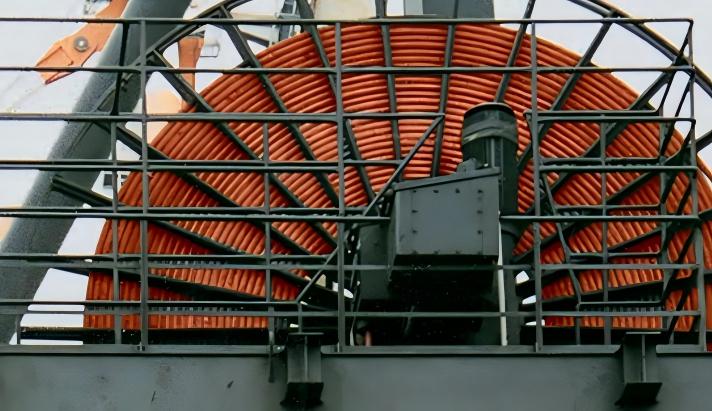
The two cable types face completely different mechanical environments. The following comparison is based on industry technical data.
Parameter | Reeling Cable | Trailing Cable |
Motion type | Repeatedly wound on and off a drum | Dragged on the ground behind equipment |
Primary mechanical stress | Tension, torsion, dynamic bending | Abrasion, cutting, crushing, impact |
Torsion requirement | High | Minimal |
Bending radius | Very small (high flexibility) | Medium |
Outer sheath requirement | Abrasion + UV + oil + torsion resistant | Very thick + high abrasion + crush resistant |
Tensile stress. A reeling cable experiences continuous pulling force during winding and unwinding. Industry data shows permanent tensile strength for reeling cables is typically 25 N/mm², with high-performance products reaching 30 N/mm². Trailing cables also experience tension, but their primary challenge comes from ground friction.
Torsional stress. This is the most fundamental difference. When a reeling cable is wound, the cores twist relative to the outer sheath. According to DIN VDE 0250-814, reeling cables must withstand torsional stress of ±25°/m to ±50°/m. Trailing cables have minimal torsion requirements — when dragged on the ground, they do not experience systematic, continuous twisting.
Bending radius. Reeling cables require very small bending radii to fit on drums. Industry data shows dynamic bending radius for reeling cables is typically 6× to 8× outer diameter. Trailing cables have much looser bending radius requirements, typically 12× to 15× outer diameter.
Abrasion and crushing. Trailing cables are dragged on the ground, facing rock cuts, equipment crushing, and impact. A 20kg rock falling from 4 meters delivers approximately 785 joules of kinetic energy — enough to penetrate a standard 3.0mm trailing cable sheath in a single event. Reeling cables also contact the ground, but their primary wear comes from drum edges and guiding devices.
The performance differences between the two cable types come from internal structural design.
Both use Class 5 or Class 6 fine-stranded copper conductors (IEC 60228) for flexibility. However, reeling cables typically use shorter lay lengths to withstand frequent bending.
This is a structural layer unique to reeling cables. Typical designs include:
l Central aramid yarn carrier: Provides tensile strength and acts as a torsion-resistant central axis
l Anti-torsion braided layer: Reverse-braided aramid or polyester fibers embedded in the outer sheath
Trailing cables do not require an anti-torsion braided layer. Their structural focus is on sheath thickness and abrasion resistance.
Material | Applicable Type | Core Performance |
PUR (polyurethane) | Reeling cable | Hydrolysis, solvent, oil, and abrasion resistant |
CPE (chlorinated polyethylene) | Trailing cable | Very thick sheath, excellent abrasion and crush resistance |
Chloroprene (CR) | Both | Oil, weather, and flame resistant |
The typical sheath thickness of trailing cables is significantly greater than that of reeling cables — this is to resist ground abrasion and impact. Some high-performance trailing cables exceed 100 mg in ASTM D1044 abrasion testing and withstand over 20 kN crush load.
Application | Cable Type | Key Rationale |
Port STS/RTG cranes (wound on reel) | Reeling cable | High torsion resistance, 6-8×D bending radius, high travel speed |
Stacker-reclaimers, tower cranes | Reeling cable | Continuous winding/unwinding, combined tensile + torsional stress |
Mining shovels, draglines, drills | Trailing cable | Ground dragging, abrasion and crush resistance, minimal torsion |
Open-pit equipment, mobile conveyors | Trailing cable | Heavy mechanical abuse, rock impact |
Underground mining drills, LHDs | Reeling cable | Reel system, confined space, frequent dynamic loads |
1.Is the cable wound on a reel? → Yes, choose a reeling cable. Its anti-torsion braided layer and aramid carrier are not present in trailing cables.
2.Is the cable dragged on the ground? → Yes, choose a trailing cable. Its ultra-thick sheath and abrasion-resistant material are not present in reeling cables.
3.Does the application involve mining safety regulations? → Trailing cables in mining applications typically require a pilot core for earth continuity monitoring. This is a regulatory requirement, not a type selection issue, but it must be confirmed during procurement.
CN Cable Group manufactures reeling cables and trailing cables for mining and heavy industry applications.
l Reeling Mining Cable: EPR insulation, reinforced CPE/PUR sheath, helical lay stranding with aramid reinforcement, rated up to 25kV, 90°C continuous / 250°C short-circuit
l Crane Cable: ICEA S-75-381, 0.6/1kV to 2kV, for port container cranes, gantry cranes, and ship-to-shore cranes
l Type W / G / G-GC / G-CGC: ICEA S-75-381, EPR insulation, CPE sheath, 2kV, MSHA listed, abrasion/crush/flame resistant
l Type SHD-GC Cable: 40% copper braid shield, integrated ground-check conductor, for AC mining shovels and continuous miners
For project-specific cable selection support, contact us.
Tel: +86-371-6054 7601
WhatsApp / WeChat: 0086 135 9887 3045
Email: Admin@cncablegroup.com
inquiry

