
Home >> News >> Company News >>
When procuring medium-voltage (MV) cables for international grid or renewable projects, buyers often focus on the cable itself but overlook the interface between the XLPE insulation and the semi-conductive shielding layer. This interface is either Bonded (chemically fused) or Strippable (physically attached).
【Quick Answer】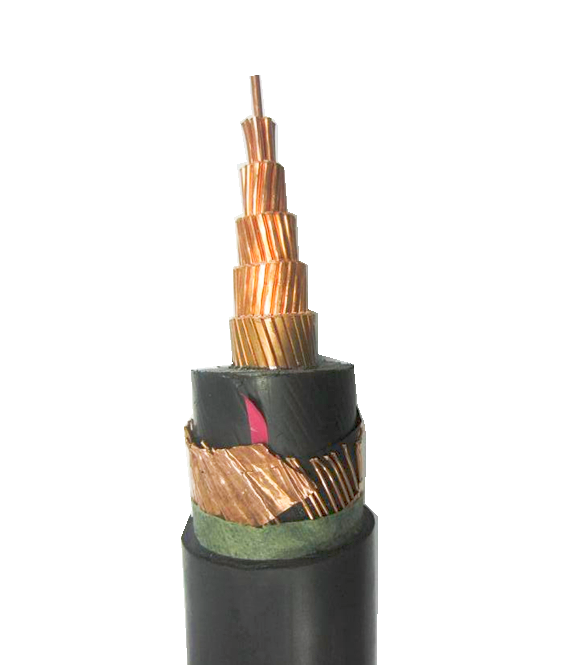
l Bonded Shielding: Chemically fused. Must be removed with specialized cutting tools. Requires prefabricated (pre-molded) accessories.
l Strippable Shielding: Physically attached. Can be stripped by hand. Compatible with both cold-shrink and prefabricated accessories.
l The Mismatch Risk: Installing cold-shrink accessories on a bonded cable is physically impossible without damaging the insulation, leading to immediate field stoppage and emergency re-procurement.
The fundamental difference lies in the manufacturing process, directly affecting peel strength.
l Strippable Shielding: The semi-conductive layer uses special polymers (e.g., EVA-based) that do not cross-link with the insulation. It relies on physical adhesion. According to Trelleborg data, the typical stripping force for strippable XLPE at 23°C is 9–10 N/cm, allowing for clean manual removal.
Dimension | Bonded Shielding | Strippable Shielding |
Interface Structure | Chemical fusion, integrated | Physical attachment, distinct layers |
Removal Method | Specialized cutting tools | Manual stripping |
Typical Peel Strength | > 30 N/cm | ~ 9–10 N/cm (XLPE) |
Accessory Compatibility | Usually limited to prefabricated accessories | Cold-shrink and prefabricated |
(Reference Standard: AEIC CS8 specifies that strippable shielding must have a strip tension higher than 10.5 N/cm.)
The installation of MV cable accessories (joints and terminations) relies entirely on the correct preparation of the semi-conductive shielding. The E.ON guide on stripping polymeric cables emphasizes that the correct removal of the semi-conducting screen is the single most important factor controlling the service life of the joint or termination.
The Core Procurement Warning:
l If you buy a Bonded cable, the installer must use a specialized shaving tool to remove the screen. This process almost always requires prefabricated (pre-molded) joints.
l If you pair a Bonded cable with a cold-shrink joint (which relies on the specific step-by-step peeling of a Strippable layer), the installer will either be unable to install the joint or will severely scratch the insulation. According to Lovink Enertech, cold-shrink systems under continuous radial tension can fail following even minor surface damage to the insulation.
【Real-World Export Experience】
In our overseas projects, we have seen clients mix Bonded cables with cold-shrink joints. The installation had to be completely stopped because the stress cone could not be properly positioned. The contractor had to air-freight prefabricated joints from Europe, causing a two-week delay and costs that far exceeded the original cable price difference.
Product Linkage: To prevent this, CN Cable Group verifies the customer‘s accessory specifications before shipping. We ensure the jointing kits match the shielding type of the cable, eliminating this interlock trap at the source.
Q1: How to tell if my MV cable is bonded or strippable?
Check the cable end. If the semi-conductive layer can be easily peeled off by hand, it is Strippable. If it is tightly bonded to the insulation and cannot be removed by hand, it is Bonded. The installation manual will also specify the screen type.
Q2: Can I use cold shrink accessories on a bonded cable?
No. Cold-shrink accessories are generally designed for strippable screens where the layer can be precisely peeled to match the joint’s stress cone. Using cold-shrink on a bonded cable will result in inadequate interface pressure and potential failure.
Q3: Why is the semi-conductive layer stuck to the insulation?
You likely have a bonded shielding cable. Do not attempt to force it off, as this will cause deep scratches on the XLPE insulation, which will lead to partial discharge and breakdown. Use only dedicated stripping tools.
Q4: What happens if the accessory does not match the cable shielding?
Even if a joint can be forced onto the cable, the stress control interface will not be established correctly. This will trigger immediate partial discharge under operating voltage, leading to rapid failure and severe safety hazards.
Selection Logic:
l Bonded Cables: Pair with prefabricated accessories. Best for projects with highly experienced jointing teams.
l Strippable Cables: Pair with cold-shrink or prefabricated accessories. Best for tight schedules or when field installation conditions are unpredictable.
Contact Us
Need to source Bonded or Strippable MV cables? Send your project voltage, installation environment, and accessory requirements to our engineering team. We will confirm the cable-accessory compatibility, provide the technical datasheets, and prevent field mismatches before they happen.
Tel: +86-371-6054 7601
WhatsApp / WeChat: 0086 135 9887 3045
Email: Admin@cncablegroup.com
Previous : SER vs. SEU Cable: The Grounding Mistake That Fails Your Inspection
NEXT : none
inquiry

