
Home >> News >> Company News >>
When sourcing low-voltage service-entrance cables for North American projects, many buyers focus only on the voltage rating (600V) and conductor material, overlooking the structural code printed on the jacket. In our export experience supporting North American EPC projects, we have seen multiple cases where SEU cable was mistakenly used as a subpanel feeder. This directly violates the National Electrical Code (NEC) and results in failed inspections and expensive rework.
To clarify the terminology first: both SER and SEU are low-voltage cables (Cable), not single conductors (Wire). They are multi-core assemblies with an overall outer jacket. Choosing the wrong structure isn’t just a technical error—it‘s a safety hazard that leaves equipment enclosures energized.
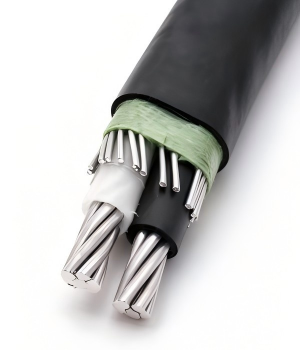
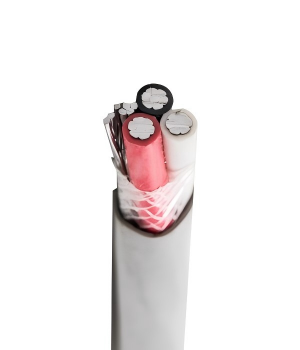
The core difference between the two is whether the neutral and ground paths are separated.
Dimension | SER (Style R) | SEU (Style U) |
Shape | Round | Flat / Oval |
Conductor Configuration | 2-3 insulated phase conductors + 1 insulated neutral + 1 separate bare ground wire | 2 insulated phase conductors + bare neutral wire concentrically wrapped (No separate ground wire) |
Grounding Method | Neutral and Ground are completely separated | Neutral and Ground are combined |
Common Material | Copper or AA-8000 series aluminum alloy | Copper or AA-8000 series aluminum alloy |
Procurement perspective: Cut a cross-section. If you see a separate bare ground wire, it is SER. If you only see a bare wire wrapped around the insulated conductors with no overall round jacket, it is SEU.
This is where the NEC (National Electrical Code) comes in, and it is non-negotiable.
NEC 338.10(B)(4) Requirement: When Service-Entrance Cable is used as a Feeder (downstream of the main disconnect), the equipment grounding conductor must be separated from the neutral conductor.
The Fatal Flaw of SEU: SEU has no separate bare ground wire. Its bare neutral is the only return path. If used on a subpanel (after the main disconnect), the neutral wire itself carries current. Because it is bonded to the panel enclosure, the metal casing of the equipment can become energized, creating a severe shock hazard.
The Compliance of SER: SER’s independent insulated neutral and separate bare ground wire perfectly satisfy the “zero-ground separation” rule required after the main disconnect.
Do not rely on verbal assurances. Buyers must check the physical product:
1.Check the UL Marking: The jacket must be printed with “UL 854” (the standard for Service-Entrance Cable) and either “Style R” (SER) or “Style U” (SEU).
2.Check the Cross-Section: Strip the end. SER allows you to count 4 independent wires. SEU only has 2 insulated wires with a bare wire wrapped around them.
3.Check the Aluminum Alloy: If the conductor is aluminum, confirm with the supplier that it is AA-8000 series alloy (the modern, safe aluminum alloy), not the outdated, hazardous EC-grade aluminum.
Q1: Can I use SEU cable for a subpanel?
No. The NEC requires neutral and ground to be separated after the main disconnect. SEU has no separate ground wire, creating a shock hazard and failing inspection.
Q2: What is the difference between SER and SEU cable?
SER has a separate bare ground wire (4-wire) in a round jacket; SEU has a bare neutral concentrically wrapped around the conductors acting as ground (3-wire) in a flat jacket.
Q3: How can I visually identify SER and SEU?
Check the cross-section. SER has a separate bare ground wire. SEU has a bare wire wrapped around the conductors with no overall round jacket.
Q4: Can I run SER or SEU cable underground?
No. Standard SER and SEU cables are not rated for direct burial. If you need to run cable underground, you must use a cable specifically rated for direct burial (such as URD or USE-2).
Tel: +86-371-6054 7601
WhatsApp / WeChat: 0086 135 9887 3045
Email: Admin@cncablegroup.com
Previous : VFD Cable Length Limits: Why Long Cables Burn Motors
NEXT : none
inquiry

