
Home >> News >> Company News >>
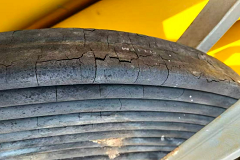 A cable gets damaged on site. It happens more often than anyone wants to admit — excavation accidents, impact from heavy equipment, excessive bending during installation, or simply a deep scratch on the sheath.
When it happens, the procurement team faces a decision: repair or replace?
This isn‘t just a technical question. It‘s a cost question, a schedule question, and a supplier capability question. Here‘s what procurement professionals need to know to make that decision.
Not all cable damage is the same. The decision to repair or replace depends on how deep the damage goes.
If the outer sheath is scratched or dented but not fully penetrated, and the armour or insulation underneath is intact — repair is usually possible.
If the sheath is completely cut through but the armour layer is undamaged — repair is possible using heat-shrink sleeves or resin repair kits.
If the damage has gone through the armour and reached the insulation layer, the damaged section must be cut out and a joint installed. If the insulation is damaged but the conductor is intact, a joint can be made.
If the conductor is broken — repair is not possible. The damaged section must be cut out and the cable re-joined. If the damaged section is too long or in a location that can‘t be jointed, the entire cable section must be replaced.
Damage Type | Repair Possible? | Method |
Sheath scratches, minor dents | Yes | Sheath repair tape |
Sheath cut through, armour intact | Yes | Heat-shrink sleeve or resin repair |
Armour or insulation damaged | Depends | Cut out + joint |
Conductor broken | No | Replace or re-join |
Each repair method has different cost, time, and reliability implications. Procurement professionals don‘t need to know how to do the repair — but they do need to know what each method means for the project.
● When to use: Superficial scratches, light abrasion, minor dents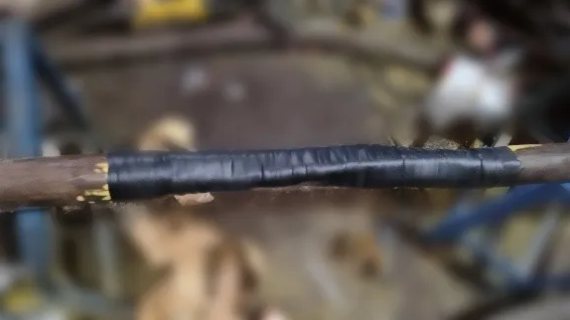
● What it costs: Minimal — tape and labour only
● How long: Usually less than 1 hour
● Reliability: High — the cable returns to full mechanical protection
● What procurement needs to know: This is the cheapest and fastest option. If a supplier recommends cutting and jointing for surface-only damage, question it.
● When to use: Sheath fully penetrated but armour not damaged
● What it costs: Low to moderate — sleeve material + labour
● How long: 1–2 hours per repair point
● Reliability: High — approved for permanent repair on LV and MV cables
● What procurement needs to know: This is standard practice. Most suppliers should be able to provide this as part of basic field support.
● When to use: Damage has reached the armour or insulation layer; requires a joint
● What it costs: Higher — joint kit + specialised labour
● How long: 2–4 hours including resin curing time
● Reliability: Good — resin joints are durable and can be direct buried
● What procurement needs to know: This is a more involved repair. If a project has multiple damaged points, the cumulative cost and labour can be significant. Resin joint kits are available for both industrial and hazardous areas.
● When to use: Conductor is broken or damage is too extensive
● What it costs: Highest — joint kit + labour + testing
● How long: Several hours to a full day depending on cable size and accessibility
● Reliability: Joints are permanent but remain potential weak points
● What procurement needs to know: Every joint is a potential failure point. Procurement should ask: can we minimise the number of joints, or is replacement the better long-term choice?
A repair isn‘t complete until it‘s verified. Procurement doesn‘t need to perform the testing — but they do need to know what tests should be performed and who should perform them.
● Insulation resistance: Confirms the insulation is intact
● Dielectric withstand test: For MV cables, verifies the joint can handle operating voltage
● Visual inspection: The repair area should be clean and properly sealed
● The same person who did the repair? Not ideal.
● A qualified third-party tester or independent inspector? Preferred.
If the supplier says “the cable is repaired“ but can‘t provide any test data, that‘s a red flag. If the supplier can perform the repair and provide test verification as part of a single service package, that‘s a reliable partner.
Resin joints can be direct buried immediately after curing — but only if the joint has been properly made and tested. Requiring contractors to perform tests and provide documentation ensures a higher quality installation.
A field cable repair isn‘t just a technical issue — it‘s a service issue. Procurement should know what to expect from their supplier when damage occurs.
Some suppliers offer field service. Others will just say “sorry, can‘t help.“ Knowing this before damage happens matters.
Not all suppliers stock heat-shrink sleeves or resin joint kits. If they can‘t supply the materials, they probably can‘t support the repair either.
Cable jointing requires trained personnel. A supplier who can provide certified jointers saves procurement from having to find and qualify a separate contractor.
This is the critical operational question. When a cable is damaged on site, time matters. Procurement needs a supplier who can respond quickly — whether that means sending a technician, shipping a repair kit, or arranging a jointing crew.
A supplier‘s ability to respond to field damage is often a better indicator of their overall service quality than their catalogue or pricing. And a supplier that can do the repair — materials, labour, testing, documentation — is more valuable than one that just supplies the cable.
If you have a damaged cable on site and need support, contact us for repair options.
Tel: +86-371-6054 7601
WhatsApp / WeChat: 0086 135 9887 3045
Email: Admin@cncablegroup.com
inquiry

